


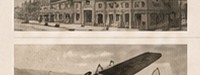
For most of my life, I thought of an address as a location. A street number told me where something was, a deed told me who owned it, and a survey told me where its boundaries ended. Eastland changed that.
The longer I worked there, the more I began to understand that an address is simply one layer in a much longer history. Before a parcel had a number, it had a survey. Before the survey, it had a landscape. Before society drew a property line across it, the ground already had elevation, drainage, vegetation, animal paths, water, weather, and human use.
Simply, it was land before it was property.
The commercial buildings downtown were attached to lots, blocks, zoning classifications, utility easements, and tax records. The houses on Ostrom and Madera Avenues on the west side belonged to another grid and timeline. The present-day address was merely a cleat in the ground with my name engraved, but that designation did not impact the successive layers beneath it.
My first understanding of the land came with my 2014 skid steer as we excavated for retaining walls, drainage, and the pool installation. I was fascinated by the colors of the multilayered sandstone and how shockingly vivid those reds, greens, and yellows were. My hands reached down while my mind wandered to what natural causes could create such clean brackets.
Once the seal was broken, each rain brought to the surface the lost households that had occupied that site: the ceramic plate chip, the marbles, the Victorian bottle neck, and the coins. Items once lost, now seeking a new story, or calling the finder back to their misplacement. It was then that I began to understand property less as a fixed thing and more as a sequence of human decisions laid over geography.
It didn’t matter how much dirt I kicked, usually followed by scratching something with my fingernail into some interesting element in hopes of finding a piece of history. I slowly concluded there was one presence I was not going to find in the same way: the Comanches. Long before the frontier settlers and farmers arrived, they knew that ground through an entirely different understanding of place and they left no remnants.
The farther back I went, the less useful the address became. Eventually, the question was no longer, what happened at this property? It became, what happened here before it was a property at all?